- Fluctuo EU Weekly Recap
- Posts
- 🔄 Shifting Gears : The Complexity of Bike-Share Transitions
🔄 Shifting Gears : The Complexity of Bike-Share Transitions
Plus, BiciPalma to finally expand, and VOI threatens to ...

Alex Gauquelin
14 Apr
TOP STORIES 🔥
🔄 Shifting Gears : The Complexity of Bike-Share Transitions
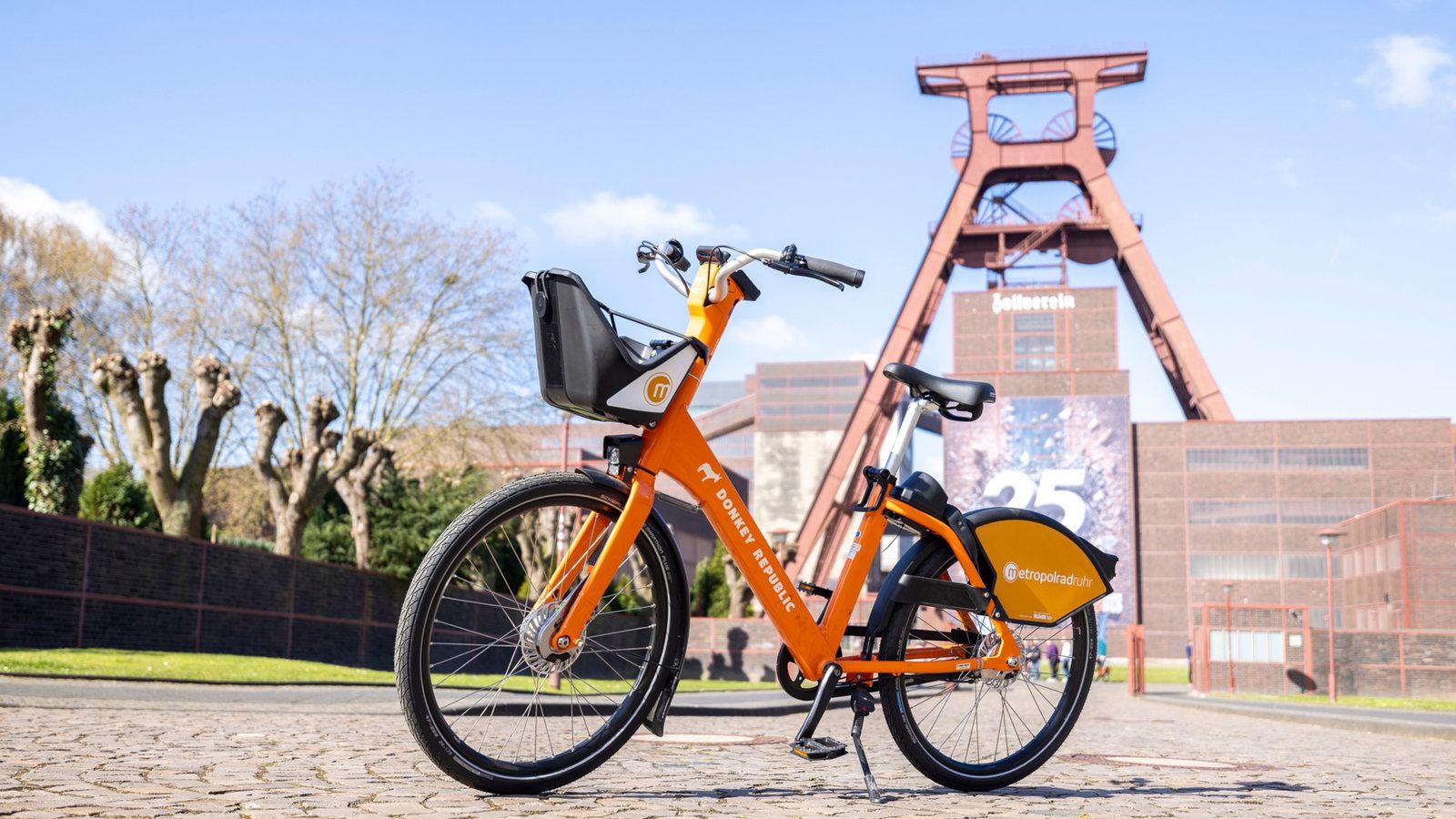
Two of Europe's major bike-share systems changed hands on 1 April 2026. The West Midlands moved from Beryl to Lime. Metropolradruhr in Germany's Ruhr region replaced nextbike with Donkey Republic. On the surface, these look like routine procurement renewals. They are not. Switching operators on a large-scale bike-share scheme is one of the most complex operations in shared mobility.
The Service Gap
The most visible risk is the dead zone between operators. In the West Midlands, Beryl went dark on 23 March — nine days before Lime launched on 1 April. In the Ruhr, nextbike bikes were progressively withdrawn through the end of March, with Donkey Republic deploying first at the busiest stations. The lesson: a phased launch, with strategic planning and city supervision, is better than a simultaneous full-network promise that can't be kept.
Changing User Habits
Every operator transition means a new user journey — a fresh barrier to casual users. In the Ruhr, Donkey Republic retained the metropolradruhr brand and pricing (€1/hour, monthly and annual passes) but changed the unlock mechanism to app-based. More fundamentally, user data — account history, subscriptions, payment details — is typically held by the outgoing operator, not the city. Cities that fail to negotiate data portability rights find themselves rebuilding their user base from scratch each cycle, creating a cold-start problem forthe incoming operator that could have been avoided.
When stations require civil engineering
Virtual hub systems like those in the West Midlands and the Ruhr keep on-street transition complexity manageable. Docked systems are a different matter entirely. The Vélib' transition in Paris in 2018 remains the industry's defining cautionary tale: when Smovengo replaced JCDecaux, each of the 1,400 stations required six to eight weeks of roadworks to upgrade electrical capacity for the new e-bikes. On 1 January 2018, only 87 stations were operational out of 300 promised. Full service wasn't restored until March 2019 — 15 months late — and the city imposed €1 million per month in penalties. When stations require civil engineering, transition timelines must be built around construction realities, not political deadlines.
Renewals as strategic opportunity
The West Midlands transition eliminated a £1.4 million annual public subsidy — Lime operates at no cost to the taxpayer, with a commitment to maintain existing price levels for two years. In the Ruhr, the five-year Donkey Republic contract doubles the fleet to over 5,000 bikes and will introduce cargo bikes and pedelecs from autumn 2026.
Tender renewals are not just moments of risk. They are the main opportunity cities have to raise their ambitions.
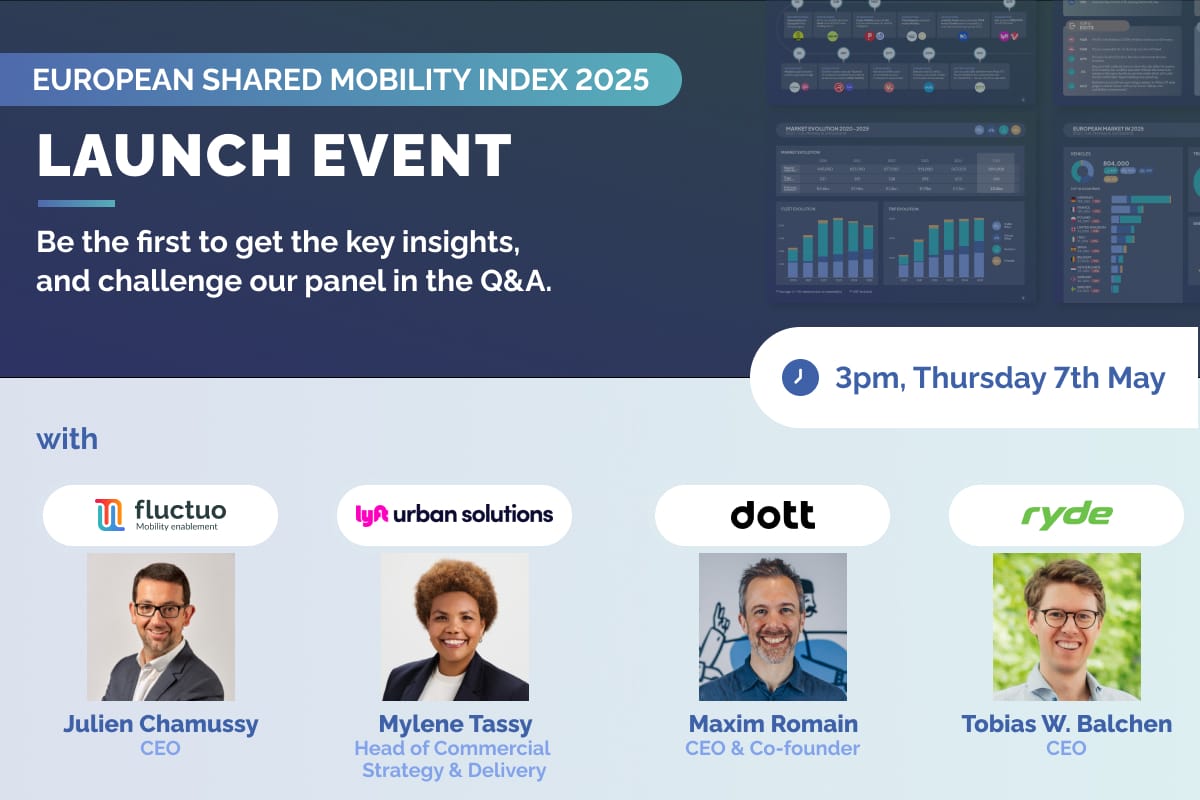
The European Shared Mobility Index 2025 is on the way!
To get hold of the key insights before anyone else, join us at 3pm on 7th May for a webinar with leaders from Ryde, Dott & Lyft Urban Solutions.
In this session, we’ll discuss:
Why scooter ridership is holding up even as fleets shrink across the continent
The cities doubling down on shared mobility — and the ones walking away
London, Paris, Oslo: the stories behind Europe's most dynamic shared mobility markets in 2025
📊 More Rides Means… Fewer Injuries
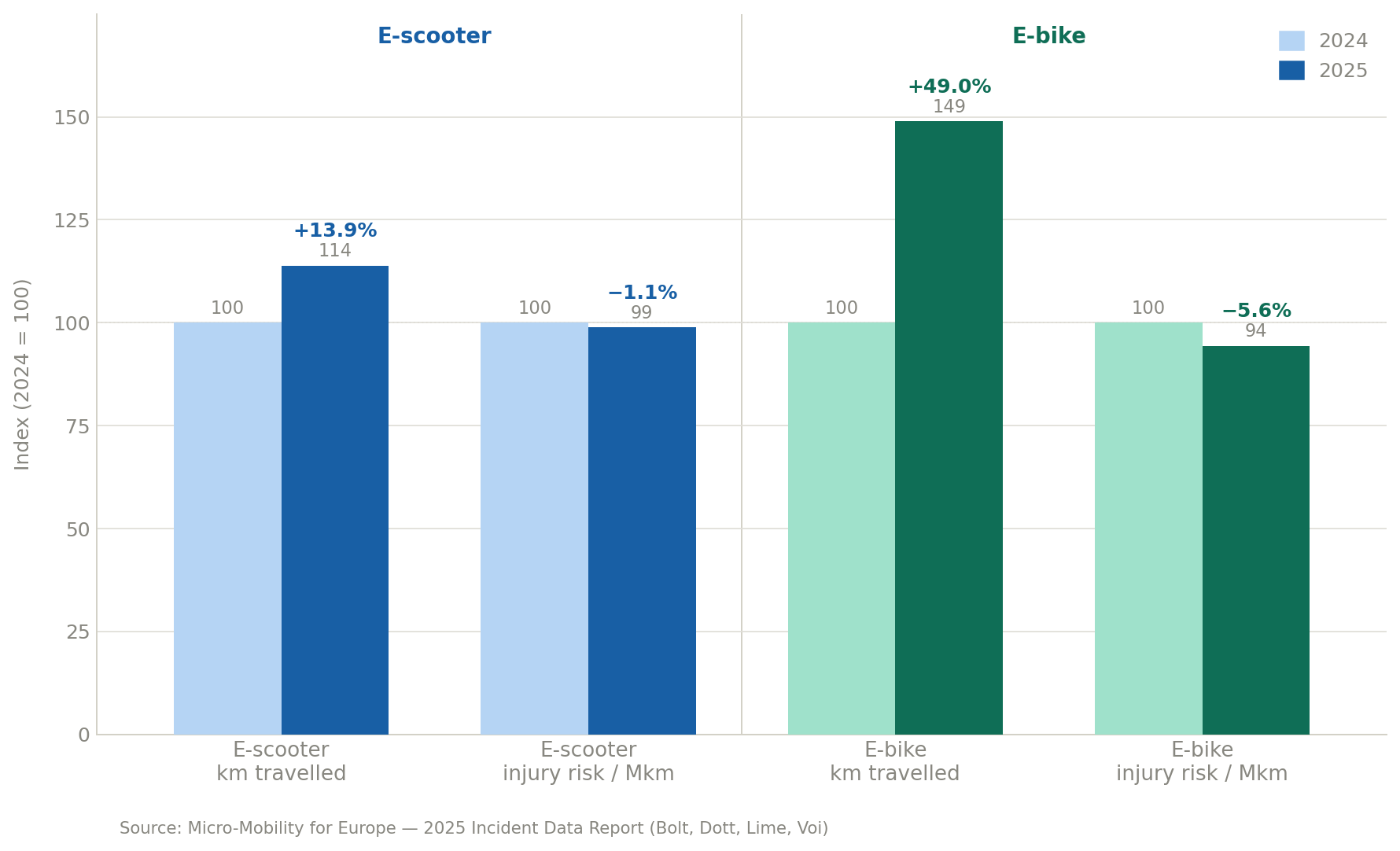
Micro-Mobility for Europe has just published its 2025 injury report — data aggregated from Bolt, Dott, Lime and Voi across the EU27, Norway, Switzerland and the UK, from 353 million e-scooter trips and 136 million e-bike rides — and the trend is consistent: shared micromobility is getting safer as it grows!
E-scooter usage rose 13.9% in kilometres travelled, yet injuries per million kilometres fell by 1.1%. Serious injury risk also dropped by 0.6%. Zoom out to the five-year view and the picture is even clearer: since 2021, injury risk per million kilometres has fallen by 19.9%.
The e-bike story is arguably more striking. Trips surged 72.3% year-on-year, kilometres travelled rose 49% — and injuries per million trips still fell, by 18.4%.
MMfE Co-Chair Marc Naether put it plainly: "growth and safety can go hand in hand." Nonetheless, MMfE acknowledges that reductions in serious injuries and fatalities are not yet happening fast enough to meet European Commission’s Vision Zero targets — and calls for better dedicated infrastructure and lower urban speed limits for motorised vehicles.

LAUNCHES & EXPANSIONS 🚀
KAIBIS
Season launch in Kayseri (TR) 🚲 (1,000)
Lime
Launch in the West Midlands (GB) 🚲&🛴 (2,000)
nextbike
Launch in …
You’re missing out on 7 launches & expansions. Subscribe to premium to read on.
TENDER WATCH 👀
You’re missing out on 2 crucial tenders. Subscribe to premium to unlock all.
CITY UPDATES 🌐

Austria (AT) | A new regulation law on LEVs comes into place from May 1st.
Berlin (DE) | Pedestrian associations ask the city not to renew scooter sharing licences in 2027.
Subscribe to premium to reveal 10 more city updates.
INDUSTRY NEWS 🗞️
Bolt has launched its Riding Score in Portugal (PT).
VOI threatens to leave the UK due to its restrictive regulatory environment.
Bolt upgrades its scooter fleet in Germany (DE) with 20,000 Bolt 7 models.
That’s all for this week.
Thanks for reading. If you have any feedback, just hit reply.
Reply