- Fluctuo EU Weekly Recap
- Posts
- 🇩🇪 No Country for Lazy Operators: Ryde's German Bet
🇩🇪 No Country for Lazy Operators: Ryde's German Bet
Plus, a hard scooter battle in Florence, and Pamplona to get a new ...

Alex Gauquelin
07 Apr
TOP STORIES 🔥
🇩🇪 No Country for Lazy Operators: Ryde's German Bet
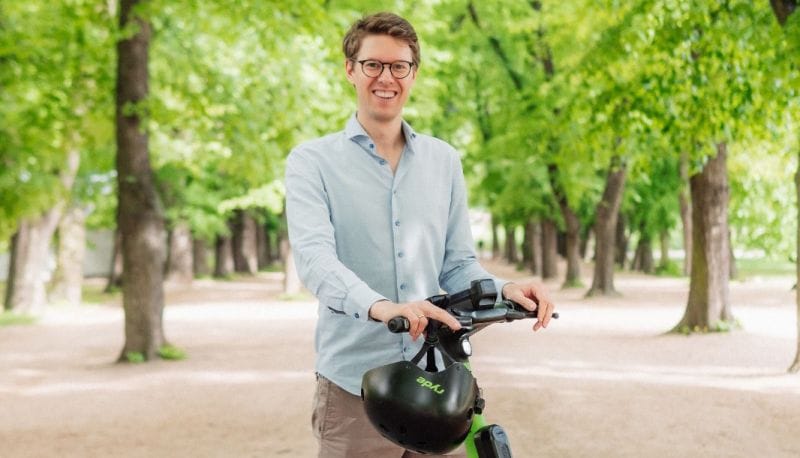
Norwegian e-scooter operator Ryde has quietly become one of Europe's most interesting micromobility stories — profitable from day one, fully in-house, and now expanding rapidly beyond Norway. We spoke with CEO Tobias Balchen.
Fluctuo : You launched in Germany in early 2026 with Frankfurt and Aachen, then Hamburg, Köln and Lübeck. How did the first wave go?
Tobias Balchen : "The German launch has been exceptional, and we actually crossed one million trips in our first month of operations in March. Frankfurt and Aachen came first, followed closely by Hamburg, Köln, and Lübeck. These five cities are all part of our first wave and the differences in launch dates were primarily logistical. We carefully screened the market and these were deemed the most attractive to launch in the first wave."
Germany is one of Europe's most competitive e-scooter markets. What's Ryde's competitive edge?
"Our philosophy is simple: never give the customer a reason not to ride with Ryde. That means hardware quality and good maintenance over time, vehicle availability in the right places and at the right times, pricing that makes micromobility accessible, and an intuitive app. Customers respond to this, and we clearly see room for our service in the market. We see micromobility as part of the green transition, and for that to be meaningful it needs to be affordable and reliable for everyday use. We won't discuss pricing strategy in detail, but we are profitable at our current price points."
You've said your Nordic regulatory experience is an asset in Germany. What does that mean in practice?
"Operating under strict Nordic frameworks has made us disciplined in ways that matter in Germany. Compliance with mandatory parking zones, response time, and city reporting requirements are embedded in how we operate, not bolted on. Cities that have had difficult experiences with operators who treat rules as negotiable tend to respond well to that. We come in having already built the systems to meet the standard."
In Sweden, you launched in Malmö, Lund and Örebro in early 2025. How are those markets performing, and what's the selection logic?
"Sweden is largely permit-based, though there are tenders in some cities — Borås being one example. We are in dialogue with many cities and target markets where we believe there is sufficient demand to support a strong micromobility service. Malmö and Lund are currently capped at 800 and 300 vehicles respectively, but utilization is very strong and we see significant growth potential in both."
Östersund is a very different proposition from Hamburg. How do you adapt?
"The model is the same; the scale is different. Hamburg can employ close to 100 people. A smaller Nordic city might run with fewer than ten. In cities with pronounced seasonality, we move into hibernation mode during winter, reducing the fleet and staffing accordingly. It is something we have managed for years across the Nordics."
Ryde operates everything in-house — no gig workers, no subcontractors. Is that scalable?
"Building fully in-house may take slightly longer to scale in a new market because we hire and train our own people. But the quality advantage is real and sustained, and the cost structure is actually favourable. When you control the full operation you eliminate the inefficiencies and quality degradation that come with fragmented workforces. That consistency becomes more valuable as we move into larger and more complex markets."
You operate in Norway, Sweden, Finland, and Germany. What's next in terms of geographic expansion?
"Our focus for the next 12 to 18 months is on executing well across those four markets. We are actively evaluating options beyond them but have no announcements to make at this stage."
Do you prefer concessions, tenders, or open permit markets?
"We can operate successfully in open markets, permit-based models, and tender-based models. What matters is that the regulatory framework supports a healthy market. Some cities set fleet caps so low — below 200 scooters — that sustainable operations simply are not possible. We want to be a genuine partner to the cities we work with, and that requires a framework where quality operators can actually deliver."
How are you funding this expansion?
"We are self-financing our expansion, supported by traditional bank debt. Being profitable from inception gives us a different set of options than most operators in this sector, and we are not dependent on equity rounds to fund growth."
👋 Florence Said Ciao. Operators Say No.
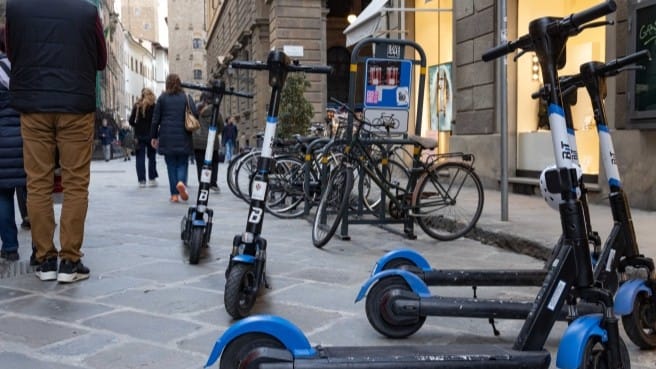
From 1 April 2026, Florence became the latest European city to ban shared e-scooter services, joining Paris and Madrid. The decision, taken by the city council in November 2025, was driven by safety concerns and the practical impossibility of enforcing Italy's new helmet requirement under a free-floating model. Municipal police removed around 80 vehicles on the first day of enforcement alone.
Both Bird and Bit Mobility have now withdrawn their shared fleets — but neither is walking away from Florence entirely.
Bird has filed a legal challenge with the Regional Administrative Court of Tuscany (TAR). An initial request to suspend the ban was rejected in February, but the final ruling on the merits is still pending. In the meantime, the company has pivoted to a private rental model, operating outside the public concession framework. "The legal game is still open," said Giorgio Cappiello, Bird's head of institutional relations for Italy.
Bit Mobility is taking a different route, pivoting to B2B. Its OrBit service — dedicated to hotels and hospitality operators — already covers over 100 properties across Italy and logged more than 100,000 rentals in 2024. Long-term private rentals complete the offer.

LAUNCHES & EXPANSIONS 🚀
Cyclocity
Season launch in Vilnius (LT) 🚲 (300)
Graoulib
Expansion in Metz (FR) 🚲(new stations)
i’Vélo
Relaunch in …
You’re missing out on 6 launches & expansions. Subscribe to premium to read on.
PAUSES & EXITS ⛔️
You’re missing out on 2 pauses & exits. Subscribe to premium to read on.
TENDER WATCH 👀
You’re missing out on 2 crucial tenders. Subscribe to premium to unlock all.
CITY UPDATES 🌐

Amiens (FR) | Pricing increase adopted for the Vélam bike-share service.
Belfast (GB) | Belfast Bikes see drop in rentals after price hike.
Subscribe to premium to reveal 5 more city updates.
INDUSTRY NEWS 🗞️
ATOM Mobility integrates SparkPark’s bluetooth parking control technology.
Bolt has revealed ambitious expansion plans in Portugal (PT).
StadtRad implements new pricing, booking and group rides features in Hamburg (DE).
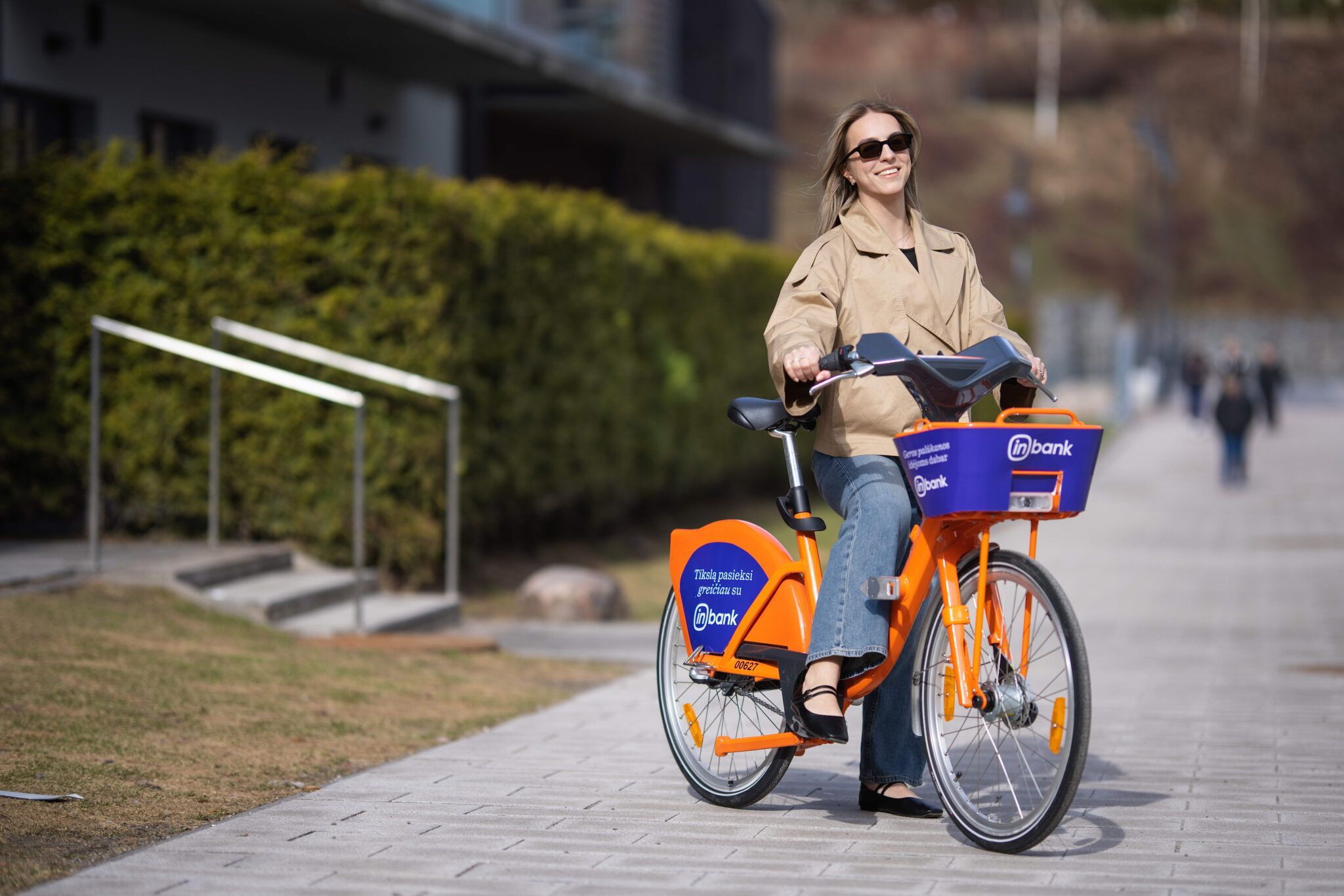
JCDecaux secures a deal with Inbank as its main sponsor for Vilnius’ (LT) service.
That’s all for this week.
Thanks for reading. If you have any feedback, just hit reply.
Reply